
Hidden Problems We Commonly Find During Home Refurbishments in Colchester

Renovating a home in Colchester can be an exciting journey, but it often comes with unexpected challenges lurking beneath the surface. Many homeowners dive into full property refurbishments with high hopes, only to discover hidden problems that complicate the process and increase costs. From uneven floors to damp patches behind bathrooms, these issues can stall your project or even cause long-term damage if ignored.
Drawing from real experiences and practical advice, this post explores some of the most common hidden problems found during home refurbishments in Colchester, Clacton and Harwich. Understanding these challenges early can help you prepare better, avoid costly mistakes, and ensure your renovation runs smoothly.
Even having several contractors to inspect, in order to provide quotations will not necessarily uncover every potential hidden issue. Some can be spotted through experience and others will not be seen until the work starts when you are uncovering subfloors, walls or areas unseen by installed items.
Uneven Floors and Their Impact on Renovations
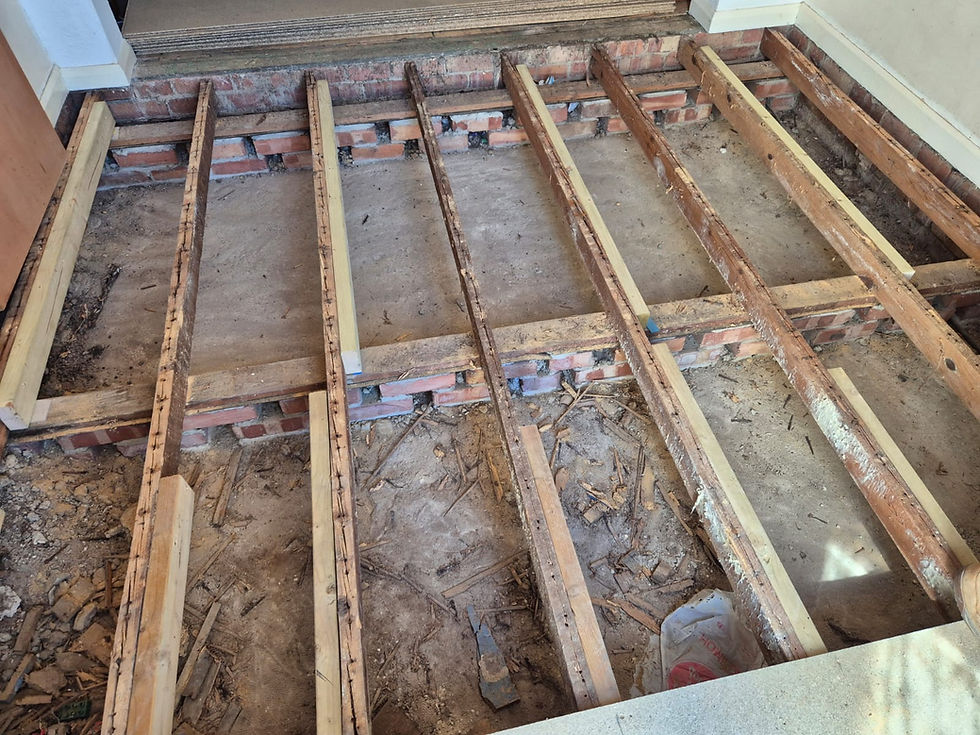
One of the first surprises many homeowners face is uneven floors. Old properties often have floors that have settled unevenly over time. This can cause problems when laying new flooring, fitting kitchen units, or installing doors and windows.
Uneven floors are something we come across constantly in older Colchester, Clacton and Harwich properties, especially once old flooring has been removed.
You may notice:
Gaps under doors and skirting boards
Gaps under fitted cabinets and appliances
Cracks in walls and tiles over time
To check for uneven floors, we use a spirit level or a laser level. If you spot dips or slopes, consider hiring a professional to assess whether the floor needs levelling. Self-levelling compounds or screeding can fix minor unevenness, but severe cases might require structural work. Do not be alarmed — more often than not, this is simply natural settlement rather than a major structural concern.
Ignoring uneven floors can affect the final finish of a refurbishment, leading to wasted materials, additional labour costs, and a poorer overall result.
Damp Issues Behind Bathrooms and How to Identify Them

One of the most common things we uncover during bathroom refurbishments is hidden damp behind tiles, units, or old plasterboard. Damp behind bathroom walls or under floors can cause mould, rot, and damage to plaster and paint.
Signs to look for include:
Musty smells or persistent damp odours
Peeling paint or wallpaper near bathroom walls
Discoloration or bubbling on walls and ceilings
Soft or spongy plaster
To identify damp, use a moisture meter or hire a surveyor. Common causes include leaking pipes, poor ventilation, or damaged seals around baths and showers. Fixing damp issues often involves repairing leaks, improving ventilation, and applying waterproof membranes.
More often than not what we see is just a break down in seals or grout which have led to water ingress. With a new bathroom installation these issues would be resolved.
Addressing damp early prevents mould growth and structural damage, protecting your health and your home’s value. These things can be dealt with at the time your bathroom is refurbished and should not cause any major delays.
The Dangers of Old Electrics and Necessary Upgrades
Many homes in Colchester, Clacton and Harwich still have electrical systems installed decades ago. Old electrics can pose serious safety risks, including fire hazards and electrical shocks.
Warning signs include:
Frequent blown fuses or tripped breakers
Flickering lights or outlets that don’t work
Outdated fuse boxes or knob-and-tube wiring
Warm or discoloured sockets and switches
Upgrading your electrical system is essential during refurbishment. This might mean rewiring, installing a modern consumer unit, or adding more sockets to meet today’s power demands. Always hire a qualified electrician to carry out inspections and work.
Investing in electrical upgrades not only improves safety but can also help reduce electrical costs and increases your home’s insurance eligibility and resale value.
Addressing Rotten Skirting and Its Implications
Rotten skirting is often one of the first signs that moisture problems have been sitting unnoticed for years, especially in damp or poorly ventilated areas. Skirting protects walls from knocks and moisture, so when it rots, it can indicate deeper issues.
Rotten skirting can cause:
Damage to wall edges and plaster
Pest infestations, such as woodworm or termites
Unpleasant smells and mould growth
Check skirting boards by tapping them gently or probing with a screwdriver. Soft, crumbly wood means rot. Removing and replacing rotten skirting is necessary, but also investigate the cause of moisture to prevent recurrence. Rotten skirting does not always mean a major damp problem, we have seen many cases where simply the plaster work is too close to the floor behind the skirting, which is damp bridging.
Replacing skirting is a relatively simple fix that improves the look and health of your home.
Identifying Leaking Pipework and Potential Solutions
Leaking pipes hidden behind walls or under floors can cause serious damage if left unchecked. Water leaks lead to damp, mould, and structural weakening.
Common signs of leaking pipework include:
Unexplained damp patches or water stains on walls and ceilings
A sudden increase in water bills
Sounds of dripping or running water when taps are off
Warped or discoloured flooring near plumbing
To find leaks, use moisture meters, thermal imaging cameras, or hire a plumber for a thorough inspection. Solutions vary from tightening joints and replacing washers to rerouting or replacing old pipes.
Fixing leaks promptly protects your home and prevents costly repairs down the line.
The Effects of Bad Previous Workmanship on Current Projects
Sometimes the biggest challenge in refurbishment is undoing poor work done in the past. Bad workmanship can hide behind walls, under floors, or in ceilings, causing problems like:
Cracked plaster and uneven surfaces
Poorly installed plumbing or electrics
Weak structural supports
Mismatched materials that don’t fit properly
Badly prepped walls for decoration
These issues often require extra time and money to fix before new work can begin. Always inspect previous work carefully and consider hiring a professional surveyor to assess the quality.
Addressing bad workmanship early avoids surprises and ensures your refurbishment is built on a solid foundation. The prep work is rarely the exciting part of a refurbishment, but it’s almost always the part that determines how good the finished result will look years later.
Mould Hidden Behind Units and How to Tackle It
Mould often grows in hidden spaces like behind kitchen cabinets, wardrobes, or bathroom units. It thrives in damp, poorly ventilated areas and can cause health problems such as allergies and respiratory issues.
Look for:
Musty smells near cupboards or units
Visible mould spots when units are moved
Peeling paint or wallpaper behind furniture
To tackle mould, remove affected units and clean surfaces with mould-killing solutions. Improve ventilation and fix any leaks or damp sources. In severe cases, consult a specialist for mould remediation. On a recent refurbishment project in Colchester, we uncovered significant mould growth behind and inside fitted wardrobes. Unfortunately, the mould had spread into clothing, bedding, and stored items, meaning many belongings had to be disposed of. The wardrobes themselves were also beyond saving, as the mould had penetrated deep into the material.
In this case, the main cause was poor ventilation combined with wardrobes being tightly packed with stored items, preventing airflow behind and inside the units. Situations like this are more common than many homeowners realise, particularly in older properties where condensation and ventilation issues have built up gradually over time.
Keeping mould under control protects your family’s health and your home’s condition.
Poorly Supported Walls and Their Risks During Refurbishment
Some older homes in Colchester have walls that were not built or supported to modern standards. During refurbishment, removing or altering these walls without proper support can cause structural failure.
Signs of poorly supported walls include:
Cracks running vertically or diagonally near walls
Walls that bow or lean
Walls that are very thin or made from weak materials
Before knocking down or altering walls, get a structural engineer to assess them. They may recommend installing beams, lintels, or additional supports to keep your home safe.
Proper support protects your home’s structure and prevents costly damage.
Hidden problems are a normal part of many refurbishment projects, especially in older Colchester homes. The important thing is identifying them early and dealing with them properly before they become larger and more expensive issues later. Most problems when they are found look far worse initially than they actually are once properly assessed and can be repaired.
At TLC Property Refurbishment, we believe honest advice and proper project management make a huge difference during renovation work. If you are planning a refurbishment project and want experienced guidance before work begins, we are always happy to talk through your plans and offer practical advice.


Comments